California MHTF Community Embedded Workforce Awards
The California MHTF, in partnership with fiscal intermediary MOMS Orange County, funded community-based organizations (CBOs), maternal health hubs, and other organizations embedded in their local communities to identify and invest in sustainable business models and best practices that align with the needs of local communities and are developed for, by, and with California's community birth workers.
The Community Embedded Workforce Awards seek to promote connection, collaboration, and support the community birth workforce’s impact on positive maternal health outcomes by strengthening the workforce's ability to 1) establish sustainable infrastructure (e.g., collectively negotiate and establish business partnerships and integrated pathways for care with key stakeholders, including health plans), and 2) collectively identify and disseminate replicable high-quality, evidence-based best practices.

Goals of the Community Embedded Workforce Awards
Strengthen Business Capacity
Develop replicable CBO business operations and capacity for collaboration, including with managed care plans
Share Best Practices for Birth Services
Disseminate replicable best practices for community birth services and strengthen connections with health care and public health systems
Enable Peer Training
Connect CBOs with one another to facilitate ongoing mentoring, training, and shared learning
Increase Access to Birth Services
Increase the number of patients, including Medi-Cal members, served by community embedded maternal health organizations
Prioritize Key Patient Populations
Increase the number of community birth workers who can provide high-quality, respectful, and trauma-informed services in different languages in key regions with community birth worker shortages
Sustain Existing Organizations
Support existing CBOs, hubs, and other organizations that understand the needs of their local communities and provide high-quality, evidence-based care and services
Strengthening and Sustaining California's
Community Birth Workforce Capacity




Strengthening Capacity:Santa Cruz & San Benito Counties

Key Learnings & Recommended Solutions
Key Learning: Trauma-Informed Care in Health Care Communications Key Learning: Closing Feedback Loops on Patient Experiences Key Learning: Maternal Levels of Care Perceptions Key Learning: Needs Following Maternity Service Closures Key Learning: Successful Practices in Perinatal Risk Assessment Key Learning: Barriers to Timely Risk Identification Key Learning: Data Availability and Needs Key Learning: Coordination Between Sectors Key Learning: Engagement with Stakeholders Proposed solutions to these issues include innovative models for collaboration, the establishment of mentorship structures, and the necessity of addressing gaps in funding for underserved communities. Recommendations stress the importance of documentation and dissemination of best practices, the need for multi-year flexible funding, and the creation of bridge funds to assist organizations during payment delays.
Recommended Solutions
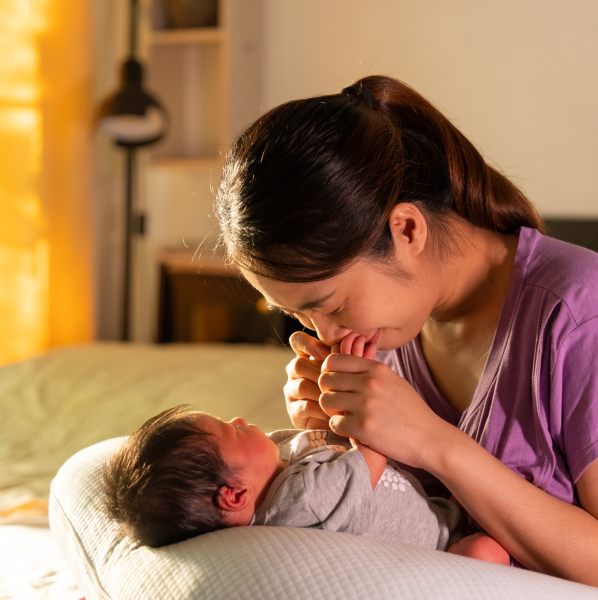

What is a Community Embedded Birth Worker?
For the purposes of this funding opportunity, a community embedded birth worker is someone who is trained and experienced in providing physical, emotional, and informational support to an individual who is pregnant, in labor and delivery, between pregnancies (interconception), preparing for a pregnancy (preconception), or recovering from a pregnancy loss, as well as support for the caregivers of birthing patients.
A community embedded birth worker:
- Is physically located in or near the community and is part of its collaborative networks
- Provides services or pursues initiatives that directly meet local health care needs and are shaped by the community’s health outcomes
- Maintains a mutually beneficial, two-way flow of learning, services, or resources that go into the local community; and local community health knowledge informs the embedded entity
- Builds and maintains continuous trusting relationships with key stakeholders
- Possesses significant knowledge of the local community’s health history and all health-related social needs
- Is a member or has staff/partners who identify as members of the local community being served, with knowledge of the local community’s health needs
- Fosters sustainable change by identifying and nurturing the existing resources, knowledge, and assets within the local community
We acknowledge there are numerous professions that serve California’s birthing communities and populations. However, for the purposes of this funding opportunity, the above is the working definition of community embedded birth worker.
About the Awards
Purpose The purpose of this funding mechanism is to increase and deepen the impact of community embedded birth workers on positive maternal health outcomes by establishing sustainable and replicable birth worker business and maternal health best practices and policies that align with the needs of the local communities served and are developed for, by, and with California’s community birth workers.
Amounts The California MHTF's fiscal intermediary, MOMS Orange County, distributed nine awards in the amount of $30,000-$50,000 each, totaling $382,500 in funding.
- Awardees are CBOs, maternal health hubs, or other organizations embedded in their local communities serving prenatal or postpartum families to enhance high-quality, evidence-based, innovative, and community centered maternal health services.
- Funds were awarded via an expedited grant application process open statewide in California.
Team Awards Applicants were encouraged to apply as Applicant Teams to demonstrate capacity for partnership building and birth service collaborations within their local communities and geographic regions. Applicant Teams submitted one application that described the project and how each organization will contribute to reaching the goal. Each organization had to meet eligibility requirements. Separate budgets for each organization on the Applicant Team were required. Each organization requested a separate amount so, when applying as an Applicant Team, the total project budget would be higher than $50,000. Each organization on an Applicant Team received their own funding, and therefore must have met the requirements of being tax-exempt under Section 501(c)(3) of the Internal Revenue Code; not a private foundation or Type III supporting organizations; and must be based in California.


Selection Criteria
Awardees are 501(c)(3) non-profits and demonstrated the following:
- Success in providing high-quality, evidence-based, and community centered maternal health services, including to populations that are currently underutilizing services
- Direct birth work (e.g., perinatal community health workers, doulas, promatoras) for at least two years
- Past and current experience serving clientele who are impacted by structural deficiencies when accessing, utilizing, or receiving Medi-Cal (or similar) services
- Active participation in a community network that includes public health, health care, and social services
- Capacity to serve a clientele with a range of health care and health-related social needs and lived experiences, and perinatal and postpartum risk
- Serving populations most likely to be impacted by negative health outcomes, and/or with high rates of maternal mortality and severe maternal morbidity
- Being well established and positioned for partnership with other entities
- Possessing leadership and expertise to inform best practices
- Supporting areas experiencing community birth worker shortages
Alignment with California MHI This project aligns with the overarching goals of California MHI in that it strengthens high-quality, respectful, and trauma-informed care to promote the sustainability of community-based services, as well as collaboration across public health, health care, and the community to improve risk communication and care coordination. It also aligns with the findings and recommendations of DHCS’ Birthing Care Pathway, which emphasizes the importance of capacity building and technical assistance support for services that can be provided in-place and in-community.
To promote alignment with the overarching goals of California MHI:
- Preference was given to applicants that have demonstrated success in providing high-quality, respectful, and trauma-informed care for American Indian/Alaska Native (AIAN) communities, Black communities, and populations that face barriers accessing and receiving health care services.
- Preference was also given to applications whose objectives focus on addressing key health-related social drivers of maternal mortality and severe maternal morbidity, such as efforts addressing maternal mental health or other maternal health-related social needs.